Nearly twenty years after a shore excursion to Berlin with the Regent Seven Seas cruise of the Baltic Sea, our high-spirited guide’s comments resonate again, as if the past were repeating itself only as a different story.
Memories as Facts
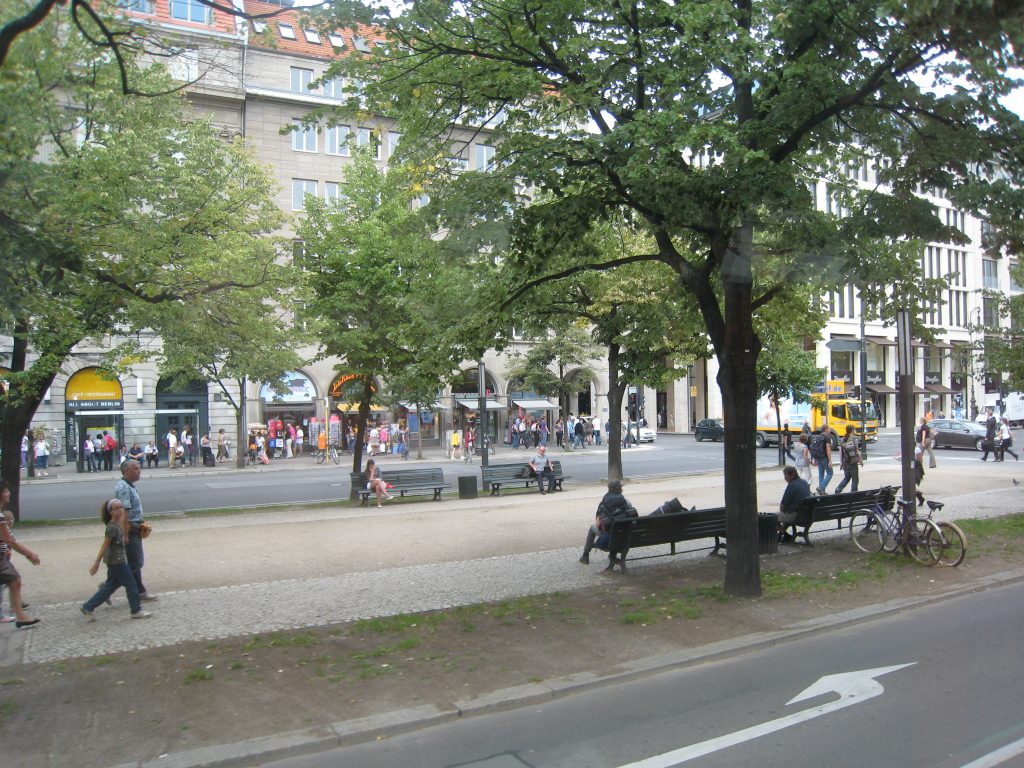
The agricultural land along the 180 kilometers (112 miles) from the German port town of Warnemünde to Berlin unfolded monotonously. Then we met Burkhardt. Our guide immediately set the tone on the drive along Unter den Linden—Berlin’s historic grand boulevard.
“There was nothing democratic about the ill-fated German Democratic Republic,” he meant East Germany. Many years ago, I heard this from students in the Federal Republic of Germany, aka West Germany.
“The Jewish Memorial stands almost above Hitler’s former bunker.” We didn’t miss Burkhardt’s karmic insinuation as we passed by the Holocaust Memorial with visitors meandering among the 2711 concrete blocks. “Jewish people represented only 0.77% of the German population, but the war killed millions in Poland.” We felt the unwarranted guilt of this genocidal fact.
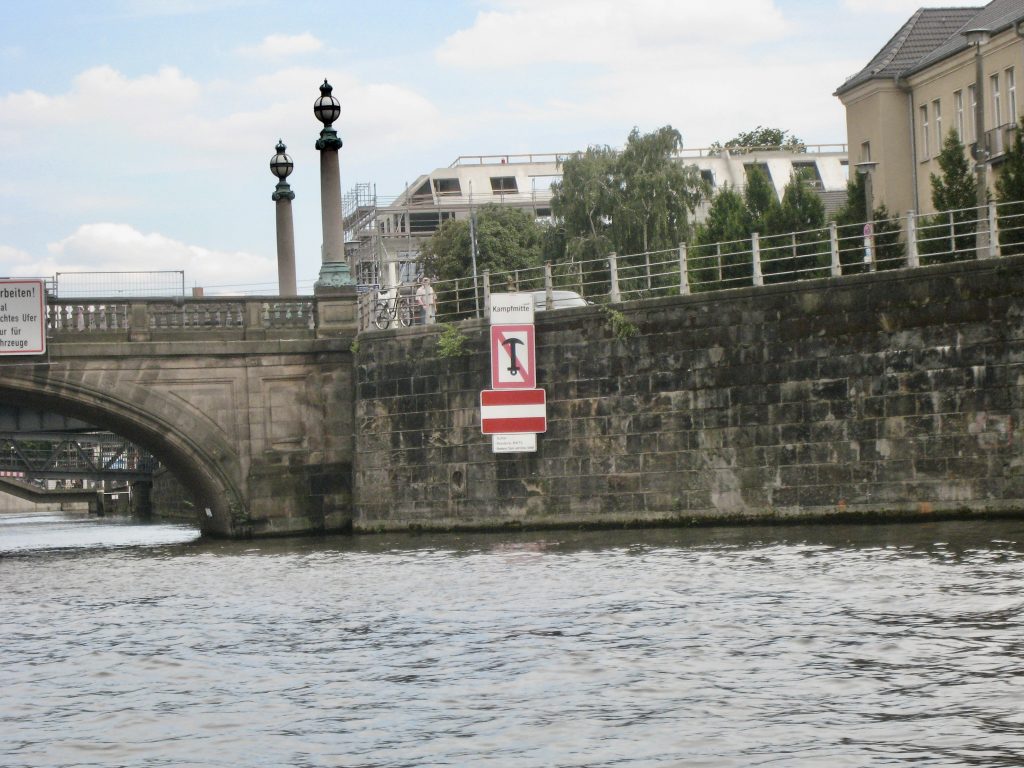
On a boat ride on the Spree River, Burkhardt made similar thought-provoking comments. His life mission was to remind everyone of what happened. “Marshall Brücke let boats through during the war, but there were fences below the water.” Burkhardt veered from that cryptic statement with sarcasm: “Berlin has more bridges than Venice, but the ugliest bridge in Venice is nicer than the nicest bridge in Berlin.” His humor lightened the mood until he pointed to signs: danger of mines, anchors forbidden. War remnants don’t let go easily. Even Angela Merkel once had to evacuate her apartment.
Burkhardt then became more personal. As a boy, he visited the Kaiser Wilhelm Memorial Church, nicknamed ‘the church with 15 bathtubs.’ After bombardments heavily damaged Berlin’s oldest church, rainwater leaked from its roof, yet it was a multi-faith sanctuary for protesters. Nearby, the Palace of Tears Museum was a vivid reminder for Burkhardt. The single-day visa to visit loved ones in East Berlin could only end with tearful goodbyes for separated families.
The Berlin Wall in Brief
Our guide then moves on with a point-by-point history lesson. WWII split Germany into four zones: American, British, French, and Soviet. Then Berlin was split again in two. The Soviets controlled East Berlin, and the Allies controlled West Berlin. When East Germans began to flee to the West through the barbed wire, the Soviet East German government sealed the border overnight in 1961. They added electrified fences, a fortified concrete wall, and guard towers.
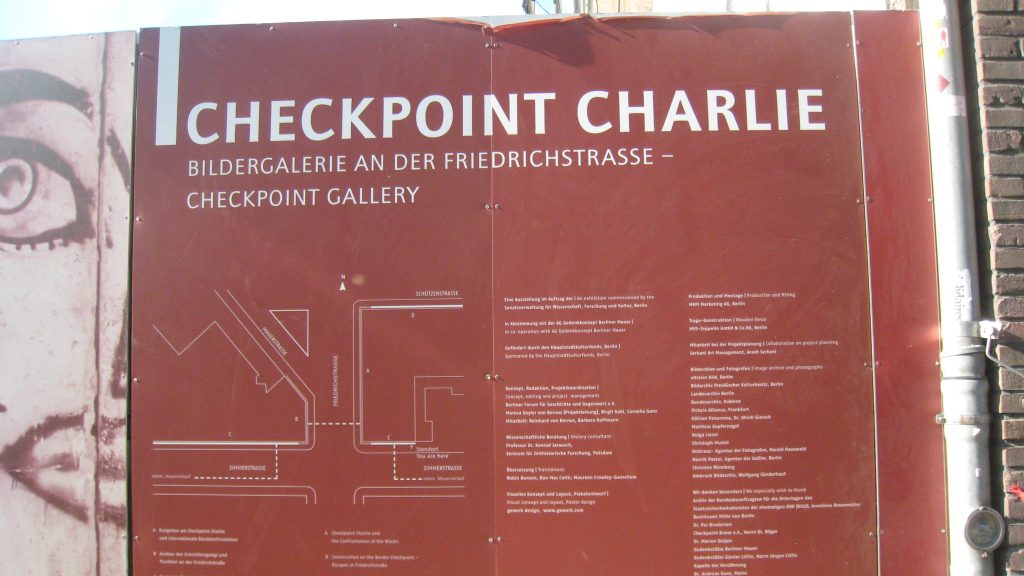
Then came the infamous tug of war. Russian Premier Nikita Khrushchev closed off Berlin with 11 checkpoints. President Kennedy ordered tanks to Checkpoint Charlie. The Russians conceded after a 14-day standoff. Checkpoint Charlie then allowed foreigners free passage from East to West. Germans who attempted to cross over were killed. Burkhardt later pointed to the white crosses in the city that serve as memorials. In 1989, protesters breached the wall. The demolition ended in 1994.
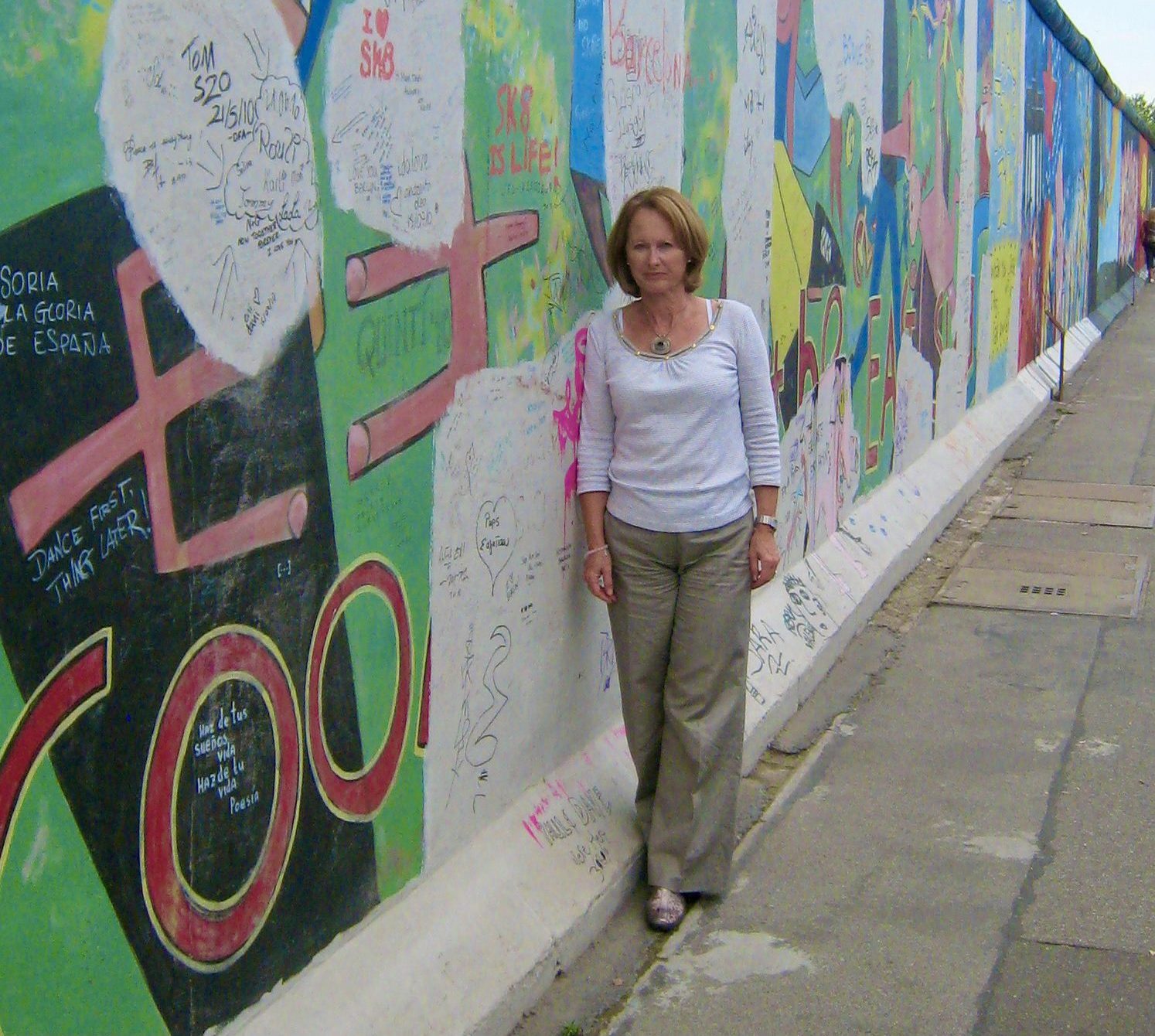
We kept pace with Burkhardt until he pointed to plaques on the street. They marked the length of the defunct wall and led to the East Side Gallery: the 1.3-kilometer (0,8 mi.) remnant wall where artists expressed themselves. Our walk ended at the Brandenburg Gate, no longer part of the wall due to development after reunification.
Berlin’s Past and Present
At the time of our tour, in 2010, Berlin was in a baffling economic situation. According to Burkhardt, millions of square feet of office space stood empty. Berlin counted 21 five-star hotels—more than in Paris or New York. The end of the Cold War had sparked an über enthusiasm for development that even freedom couldn’t buy.
Our spirited guide then left us with an anecdote. After reunification, Eastern Germans so resented any reminder of the Führer that the term Stadtführer (city guide) changed to Stadtbild Erklärer (city map explainer). Since then, semantics has returned to its original purpose.
Today, the remnants of the Berlin Wall struggle to remain a symbol of nations being better off as allies than adversaries.
Note: In 2025, Berlin visitors occupied 66 percent of hotel capacity, thanks to its cost-effective policy that attracts fairs and conventions, and a thriving music, film, fashion, and design industry.
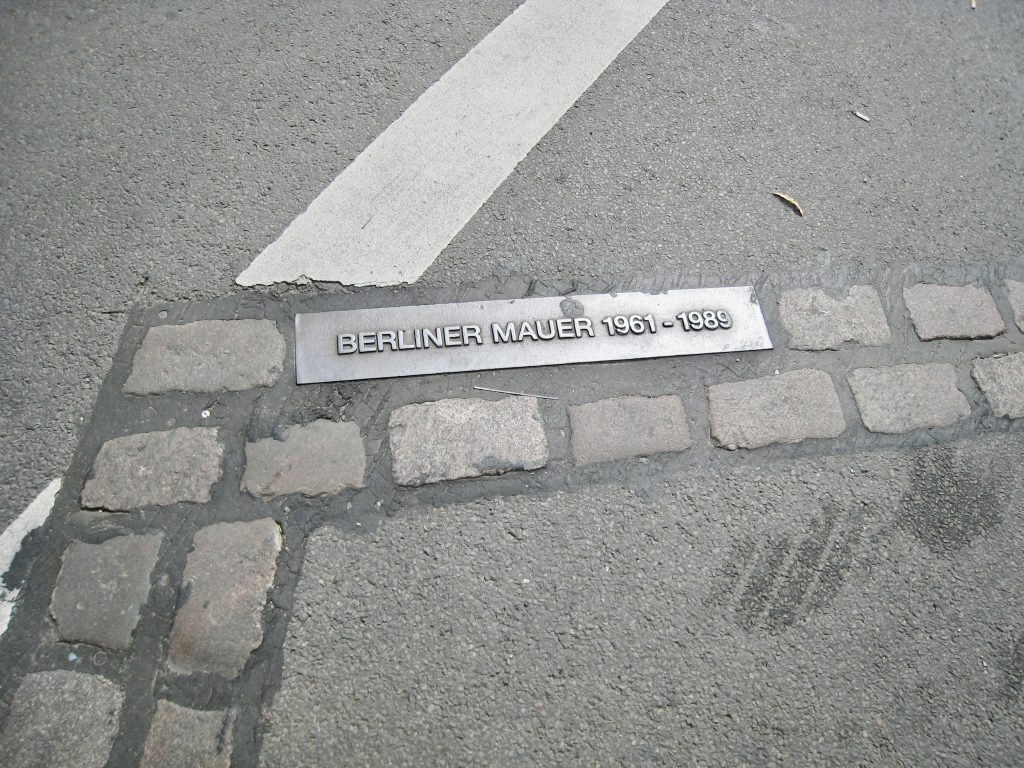
Street markers of the Berlin Wall (MCArnott)
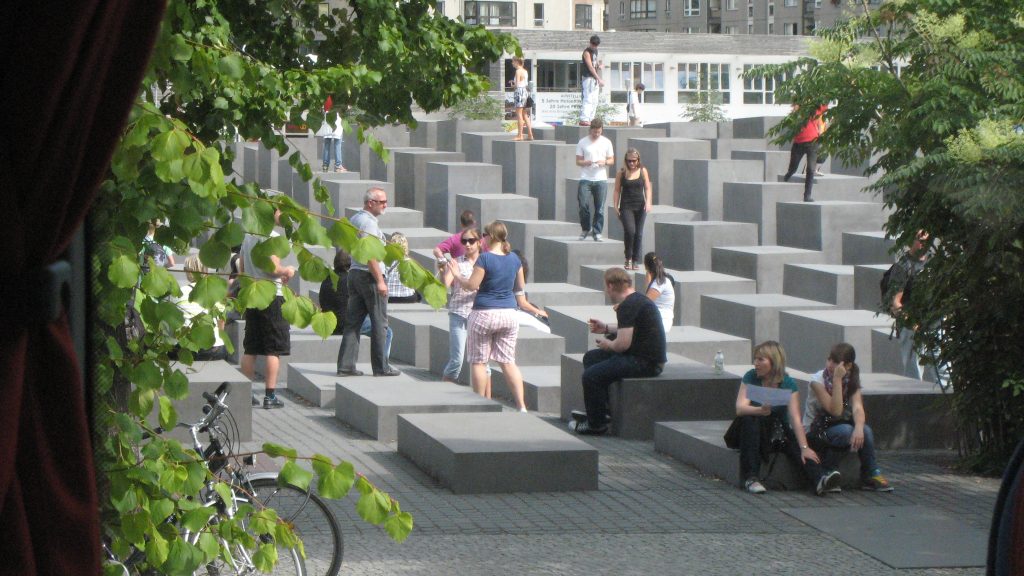
Berlin Holocaust Memorial (MCArnott)