Hawaii’s vibrant coral reefs hold a fateful secret. For marine biologists, the intriguing ‘horse of the sea’ is like the canary in the coal mine. Wild seahorses are disappearing at an alarming rate. Yet, the same unsustainable fishing practices endanger other sea life too.
I am getting acquainted with seahorses in Kailua-Kona, on the volcanic coast of Hawaii, aka the Big Island. There, the Seahorse Foundation maintains a permanent home at the Ocean Rider Seahorse Ranch. At first sight, it’s a tourist attraction, but the hands-on experience creates awareness of the plight of that fish species; the market demand is growing faster than its natural reproduction rate.
First, human activities disturb their habitat—in tropical, shallow waters. Worst still, seahorses are an ingredient for traditional Asian medicine, souvenirs for the tourism industry, and pets. Furthermore, the catch-as-catch-can fishing practice of bottom trawling causes a shocking waste of marine life, seahorses included.
The Secret Life of Seahorses
It’s not easy to study the fish with the iconic equine-shaped head. They excel at camouflage. Leading world experts at Project Seahorse—a marine conservation group with offices at the University of British Columbia in Vancouver, Canada, and the Zoological Society of London in the United Kingdom—have identified 46 species. They range from some thirty centimeters long to less than two.
Unlike other fish, swimming isn’t easy for seahorses. Their body, armored with bony plates—hence their distinctive rings—can only move erect or up and down, with an ‘air bladder’ regulating buoyancy. The animal must use its tail to anchor itself on coral, seagrasses, and mangrove roots. It has no teeth or stomach and feeds almost continuously on shrimps and shrimp-like crustaceans, sucking them through its long snout. Their coronet identifies them individually, and their colors vary from camouflage to vibrant garb.
The Seahorse Pregnancy Teamwork
In the wild, seahorses are monogamous, perhaps because their density is scarce unless camouflage isn’t conducive to impromptu romantic encounters. However, this behavior changes in the temptation-prone vats of the sea farm where they are born. Under the circumstances of a community, they learn to change partners.
As mates, seahorses are creatures of habit. They begin their day with a greeting dance to keep the romantic flame alive. Then each goes its own way, somewhat like what people do. But the comparison stops here because the seahorse pregnancy protocol is baffling to humans. The female deposits her eggs for fertilization in a pouch in the male’s belly, and one month later, several hours of contractions release up to 1000 seahorses ready to fend for themselves.
Seahorses and their relatives—the sea dragon and the pipefish—are the only males on Earth to give birth. The reason might be survival. While the male carries out the pregnancy, the female produces more eggs, so mating can happen with no time wasted. This phenomenon allows marine biologists to expand on the understanding of reproductive ecology.
A Hands-on Encounter
As I walk from vat to vat in various stages of seahorse development, it’s evident that farming would reduce the need to harvest them in the wild. They would feed, mate, and thrive in an ecologically sound way of meeting market needs.
I am looking at one seahorse in particular. I can’t see the tiny, propelling fin on its back nor the two steering ones on each side. Its head tilts up and down, but the eyes are too small for me to notice that they swivel individually. I then follow instructions on how to put my hands in the vat’s seawater and wait. Moments later, a nosy one checks me out, its prehensile tail wrapping my index finger with a tickling pressure.
If You Must Have a Pet Seahorse
First of all, know that wild seahorses have a short life outside their natural habitat. Then, be sure to provide a mate, or your seahorse will die of loneliness, refusing food and withering away. A frozen shrimp-based diet is appropriate for farmed seahorses. Here, they thrive on Ocean Riders Vibrance, a vitamin-enriched shrimp and algae mix. Without the proper living conditions, seahorses lose their vibrant colors and buoyancy, and then die.
About Project Seahorse
Their density in Chinese markets doesn’t exist in the wild, an observation that launched Dr. Amanda Vincent’s crusade for sustainable trading practices. A pioneer in seahorse research in the late 1980s and Project Seahorse co-founder, she was the first to have studied them in their natural habitat.
Project Seahorse focuses on education. Without preservation, the need for seahorse availability will disappear with them. To reconcile harvesting with conservation, Project Seahorse micro-finances the shift from fishing wild seahorses to farm-raising them. Their trade, indeed, represents subsistence for fishermen in some parts of the world. Unfortunately, these countries seldom enforce a ban on illegal trade.
To end the plight of seahorses on a sweet note, know that when you indulge in the distinctive Guylian chocolate seashells, you fund the Project Seahorse. As for the trusting seahorse that held my finger, it now seems like it was a call for help.
Sources
- American Association for the Advancement of Science
- Project Seahorse
- Seahorse Behavior and Aquaculture
- Seahorse Hawaii Foundation at Ocean Rider
- Check these amazing photos and videos from Ocean Conservancy
Message from Margaret B. July 28, 2021: Your website is beautifully presented and interesting. I like the variety of subjects; it’s informative, fascinating, and personal. It excited my curiosity too! I wonder how those tiny seahorses view life. Just a matter of survival? Do they yearn for more than that, as we do? They are so caught up in the whims of nature and human actions.
-
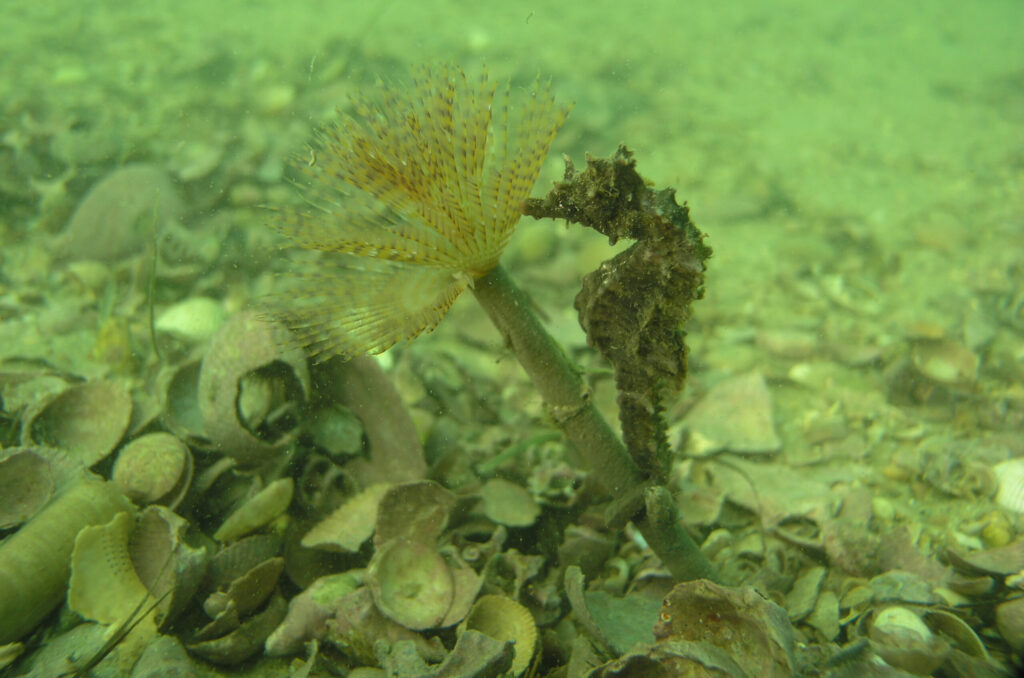
- H.hippocampus, Portugal (Ian Caldwell – Project Seahorse
-
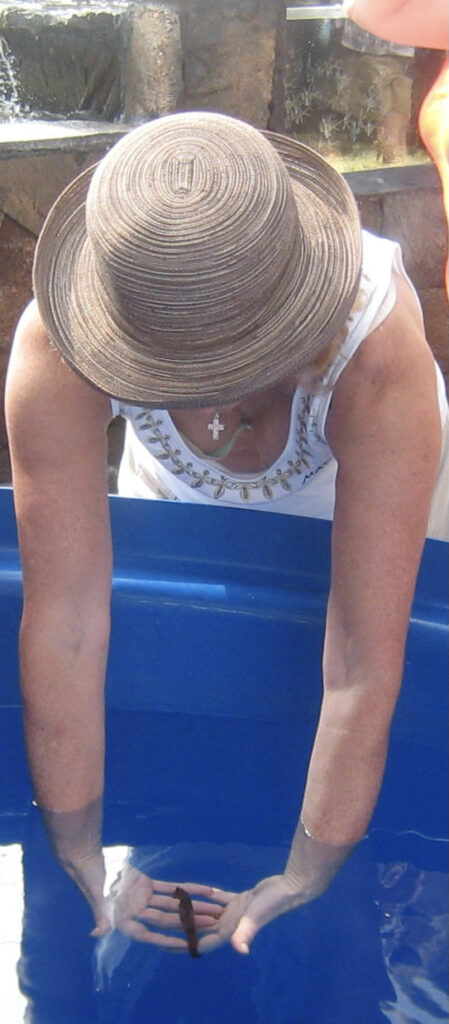
- A seahorse wraps its tail around my finger. (JRArnott)
-
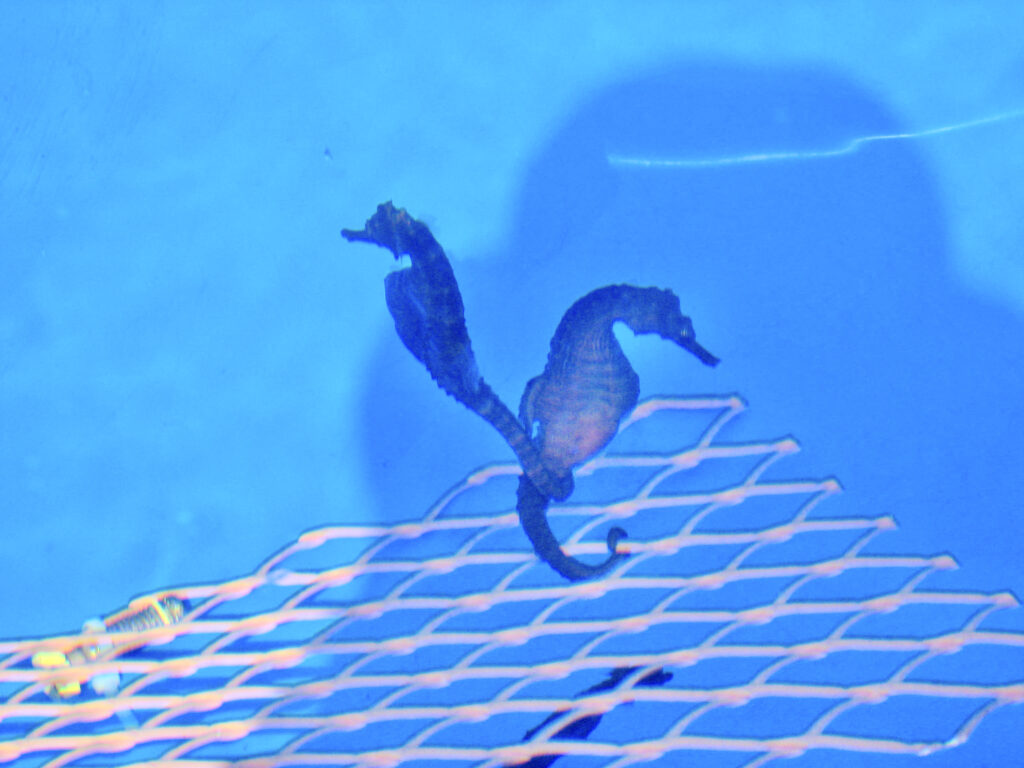
- In the wild, seahorses have a mate for life (MCArnott)
-
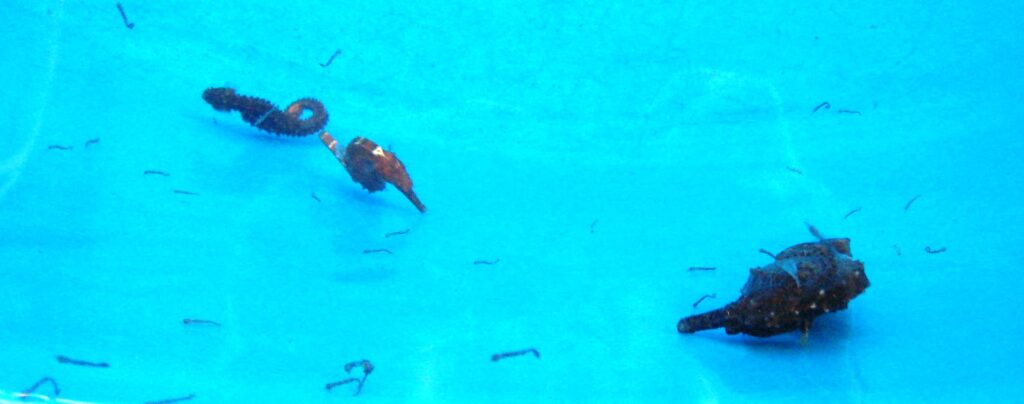
- Seahorses with babies (MCArnott)
-
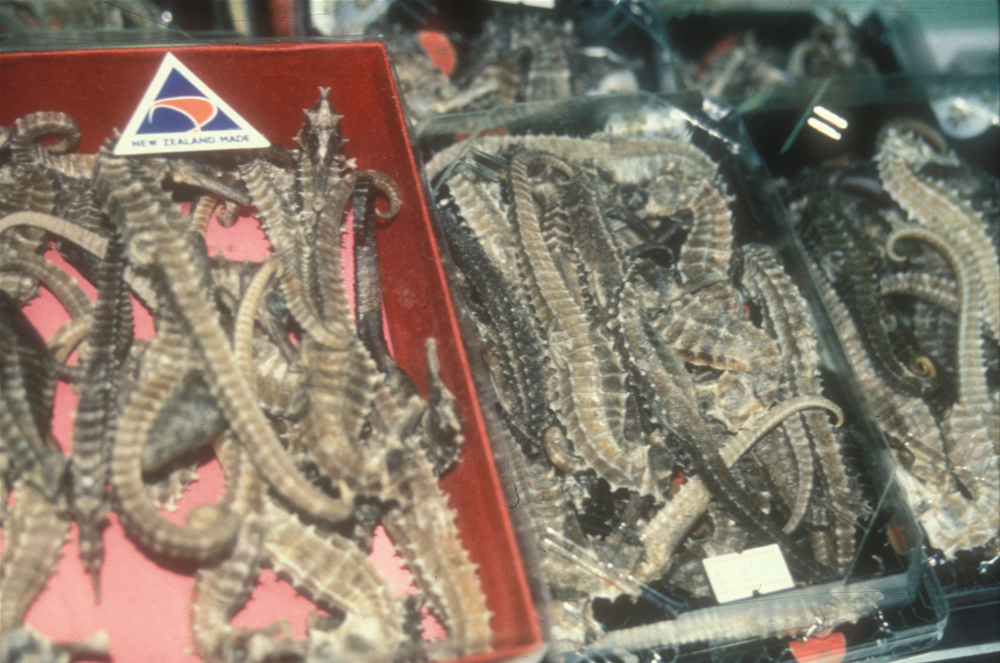
- Seahorses at a Chinese market (Project Seahorse)
-
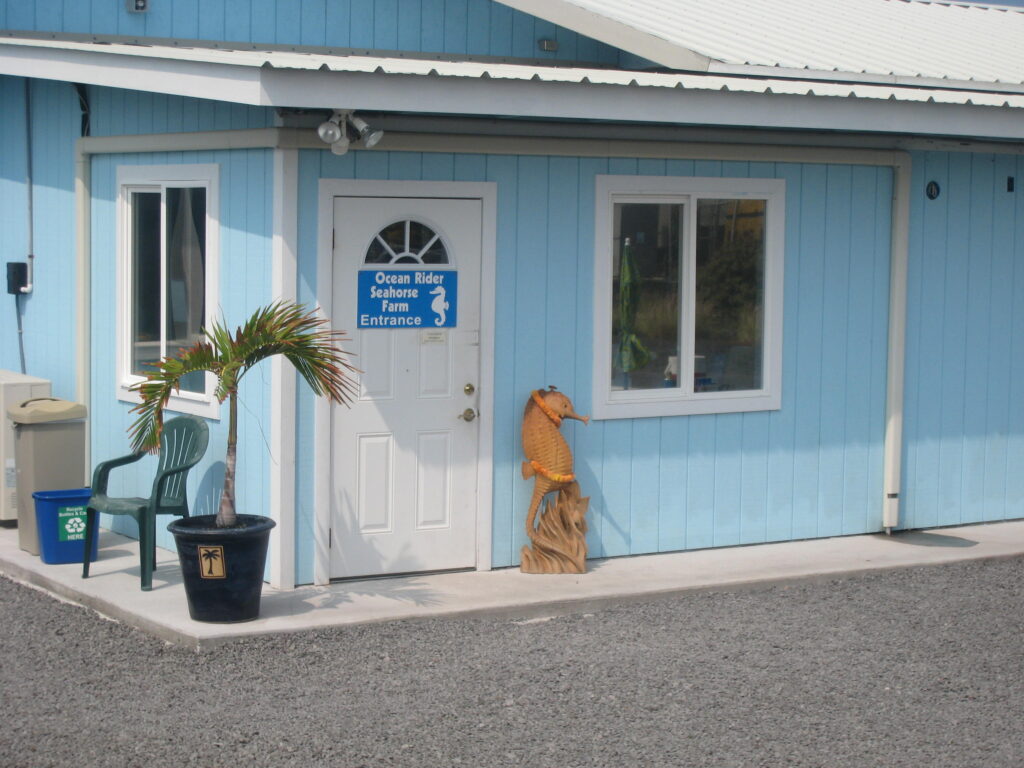
- Ocean Rider Seahorse Ranch in Kailua-Kona, Hawaii (MCArnott)
First published in 2008 on Orato.com – revised 2022