
I hold my breath while exhilarated fellow voyagers scream at the top of their lungs. We are tumbling at a vertiginous speed into the magma chamber of an active volcano. The idea of hell crosses my mind.
Then I remember: we are in a simulator at Vulcania, an amusement park, and an education and academic resource center for volcanology. We haven’t moved at all.
Something about Vulcania,
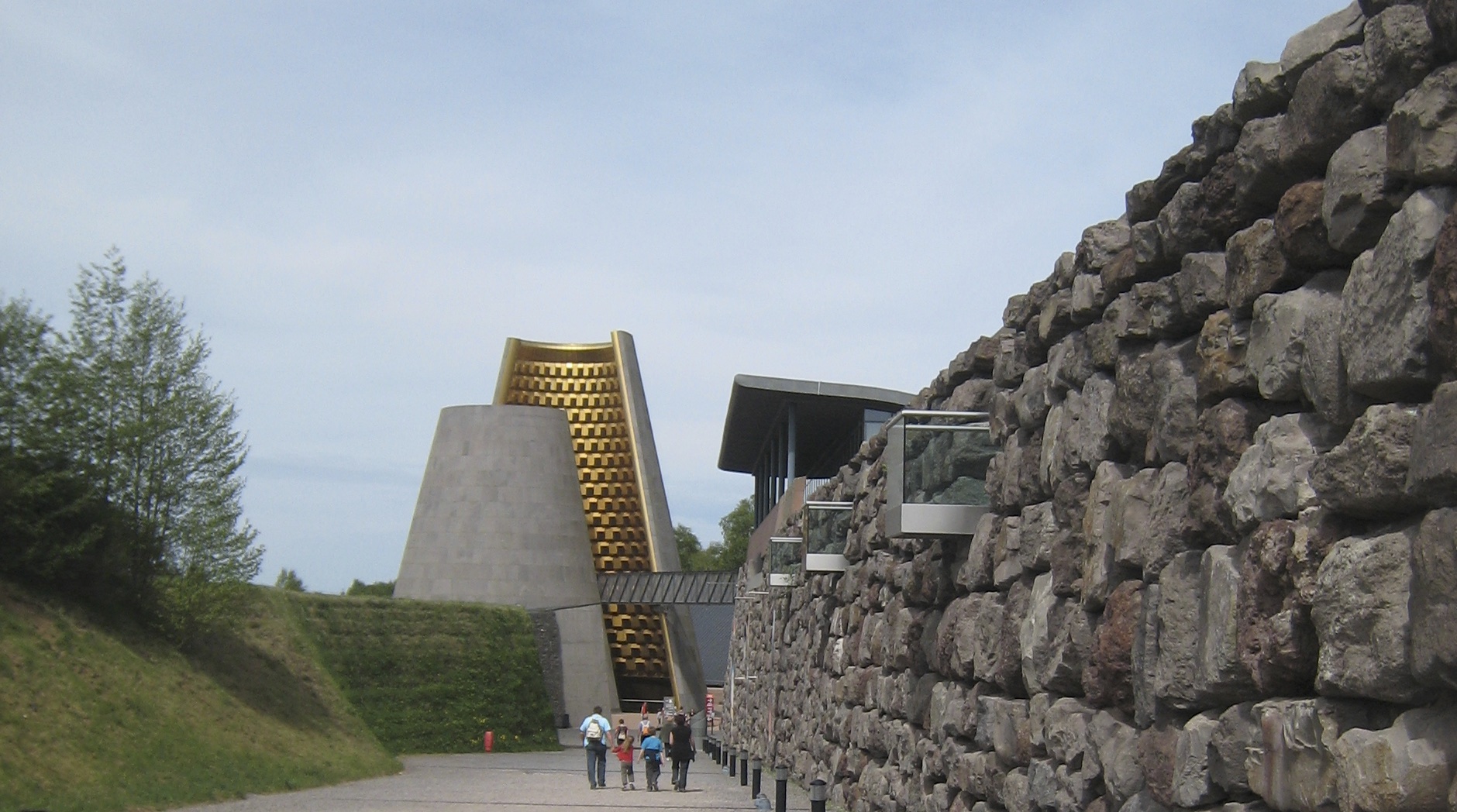
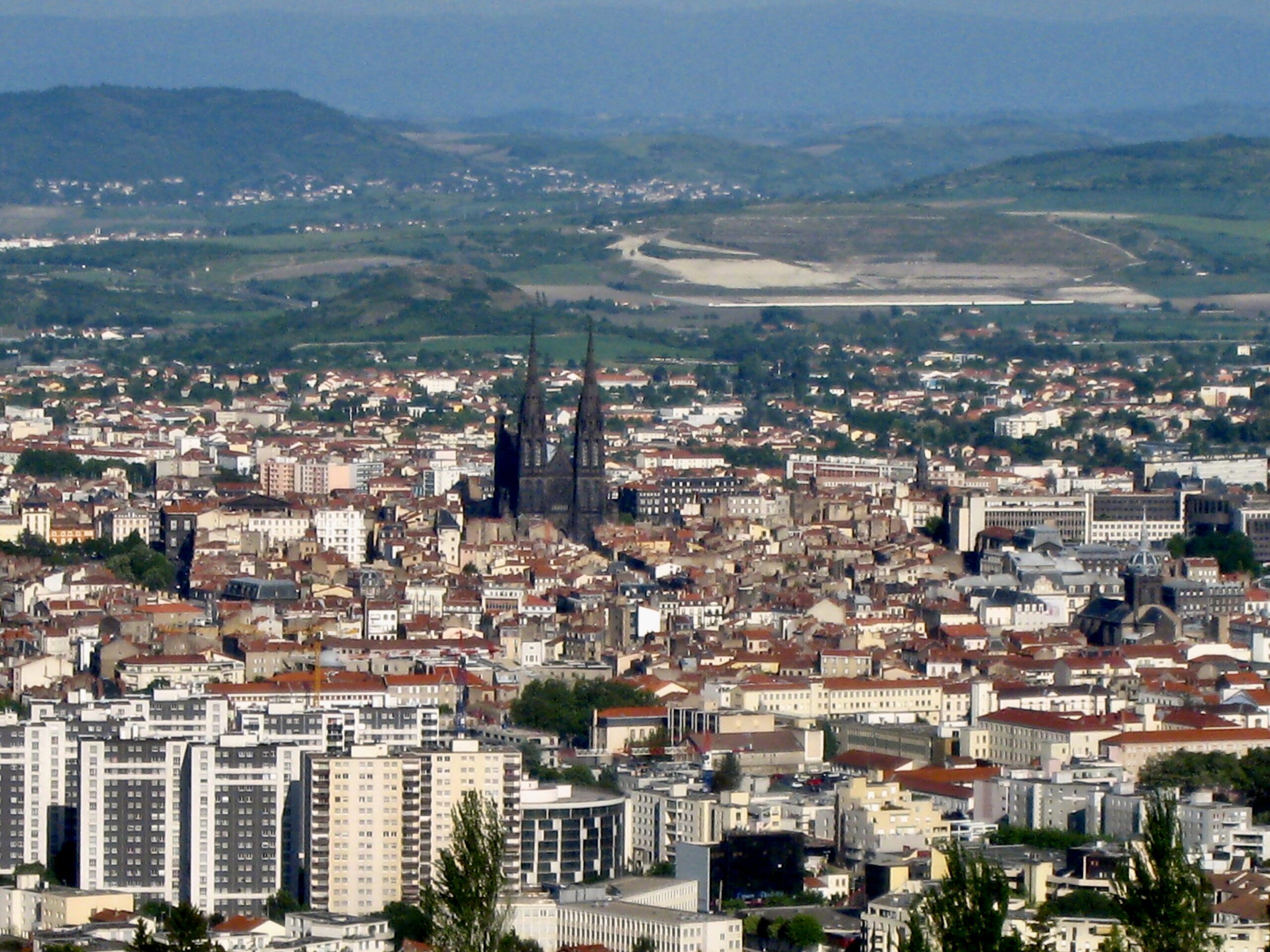
Vulcania is located in Saint-Ourse-Les Roches, a 20-minute drive from Clermont-Ferrand, the capital of Auvergne in central France. In its center rises an odd black cathedral built with… volcanic rock.
Vulcania geological park sits on a 93,000-year-old and 40-kilometer-long volcanic range. Looming over the countryside, the Sleeping Giants–the dormant volcanoes–rise as grassy pyramidal mountains. The highest and youngest is Puy de Dôme, peaking at 1,465 meters.
Vulcania’s landmark is a curious 28-meter-high conic structure wrapped in sheets of volcanic rock “to reflect the light without blinding.” The inside is definitely high-tech: the gold liner is made of stainless steel tinted with vaporized titanium.
A Simulation With Fun and Fear
I am here to explore the guts of the Earth in a make-believe facility, through exhibits and attractions filled with extremes: interactive platforms, virtual explosions on gigantic screens, and the origin of a half-ton metallic meteorite that must have hit Earth in its earliest days. These unique experiences let you learn, feel, and imagine Earth’s fantastic power—and fear its wrath too.
But it’s the pairing of reality and simulation that is most captivating here. With a 35-meter-deep crater, a caldera, and a lava tunnel, most of the Vulcania site is built in the lava of a volcano that erupted 30,000 years ago.
Down there, The Dragon Ride introduces us to volcanology before it was a science. I feel the breath of dragons, the Earth rolling under my feet, and something mysterious poking me in the back. The sound and visual effects reveal that mythical creatures like dragons were invented to explain natural phenomena before science existed.
The fun becomes serious at Mission Toba: the supervolcano that erupted in Indonesia some 74,000 years ago. As I watch the fictionalized, yet scientific vision of that doomsday eruption, I ponder what dormant really means. Am I not standing in the middle of the dormant volcanic region of Auvergne? Hum…
And I discover what would happen at The Awakening of the Sleeping Giants of Auvergne attraction. I watch a grassy mount blow up in smoke. I get startled when the cap explodes, and the volcano spits rocks and fire like… a furious dragon. Animals flee from woods and burrows while a bellowing, ashy mass drifts over the shaken yet still verdant countryside. Then magma spills down the slopes, scorching everything on its way. This is make-believe, but my jaw has dropped, and my mouth is dry; the emotions are real.
The Volcanoes of the World
Later, I mull over an interactive map of a dozen super-volcano sites in the world. The mightiest one? Yellowstone National Park, in Wyoming; it’s 10,000 times more powerful than a regular volcano. Some researchers claim it would plunge the planet into a volcanic winter for several years and wipe out part of the human population. Don’t panic; keep on reading!
I am particularly interested in an exhibit on the Pacific Northwest where I live. The Cascade Range exhibit informs about the devastating 1980 eruption of Mount St. Helens. It had been dormant for 123 years, a mere blink of an eye in volcano time.
Nearby Mounts Baker, Hood, and Shasta are still holding their fire. And so are most of the 1,500 active and dormant volcanoes worldwide. Meanwhile, two dozen of them are in an eruptive phase.
For the Geological Scientists at Heart
Vulcania was Katia and Maurice Krafft’s vision, two French vulcanists who perished in the 1991 pyroclastic flow (an eruption of volcanic rocks and searing gases) at Mount Unzen on Japan’s Kyushu Island, along with their American colleague Harry Glicken and 41 others.
The exhibit Volcano Devils memorializes their life mission: to witness and understand volcanic eruptions, to educate and help reduce volcanic disasters.
Vulcania might spark a vocation in the teenage visitors who enjoy the serious fun of the educational rides and those enrolled in Vulcania’s scholastic science programs. They might ask why magma is red when the planet’s core is primarily green. They will differentiate between magma (the underground molten rock) and lava (the ejected molten rock).
Here, they also learn that geologists study the physical records of volcanoes to trace prehistoric eruptions dozens of millennia ago. Geophysicists and geochemists study the underground layers. Meteorologists follow dust and gases in the atmosphere around the globe. Through fun, thrill, and fear, they learn about the science of volcanology.
As for the little kids, their height determines which attraction is suitable. The Children’s Lab introduces them to natural phenomena while animated dinosaurs await in the park.
For Peace of Mind
Consider this quote from Jake Lowenstern, the then-head of the Yellowstone Volcano Observatory: “… there is little indication that one [eruption] will happen anytime soon. Serious volcanic activity would follow a considerable amount of [ground] deformation, intense earthquake swarms, and steam explosions. Yellowstone’s recent activity pales in comparison.”
That a global volcanic doomsday isn’t in the forecast is explained via the ASA/USGS Landsat Program, a satellite that “provides the longest continuous space-based record of Earth’s land in existence.”
Meanwhile, all is quiet on the Sleeping Giants’ front.
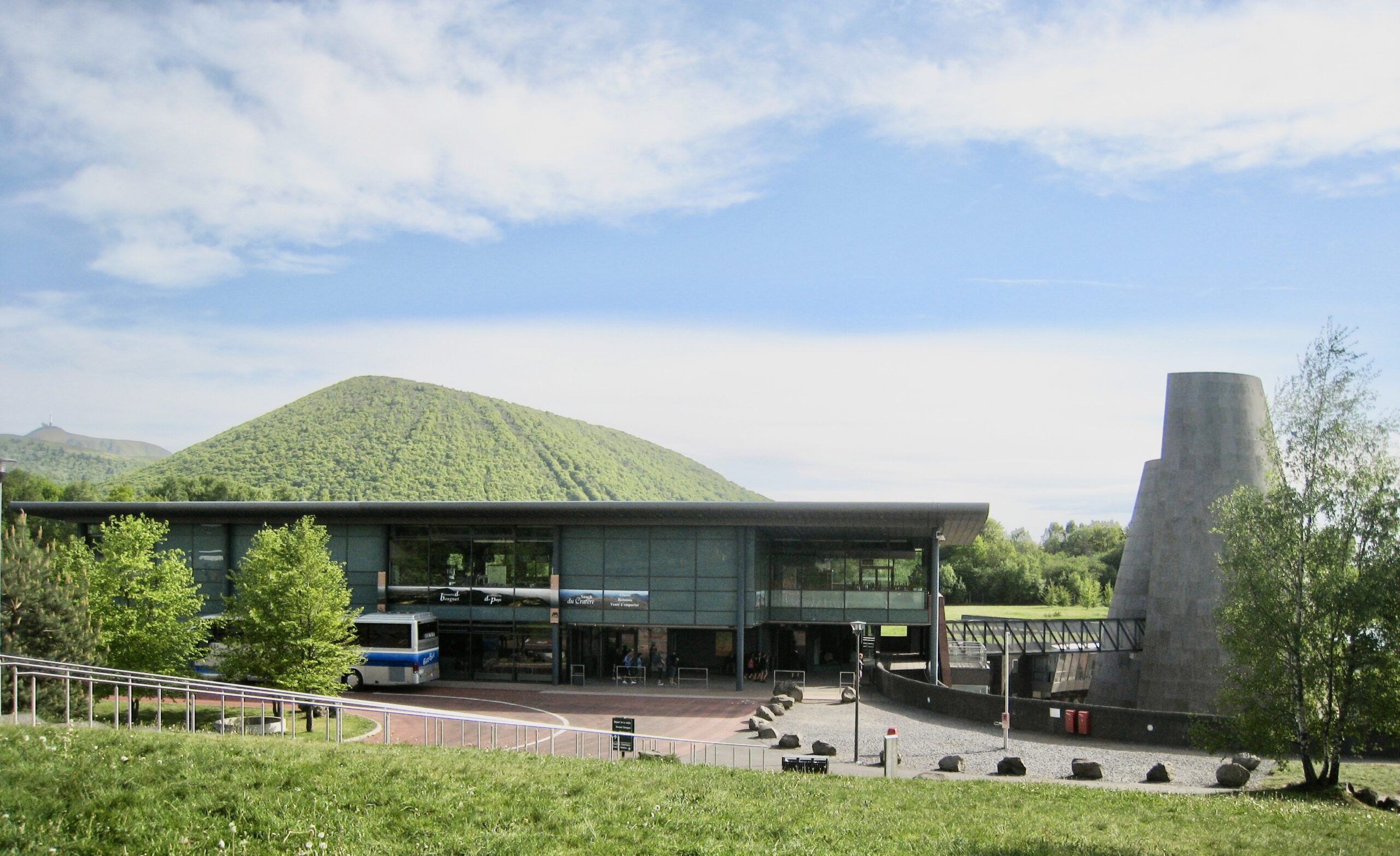 The entrance to Vulcania – the exhibits are underground. (MCArnott)
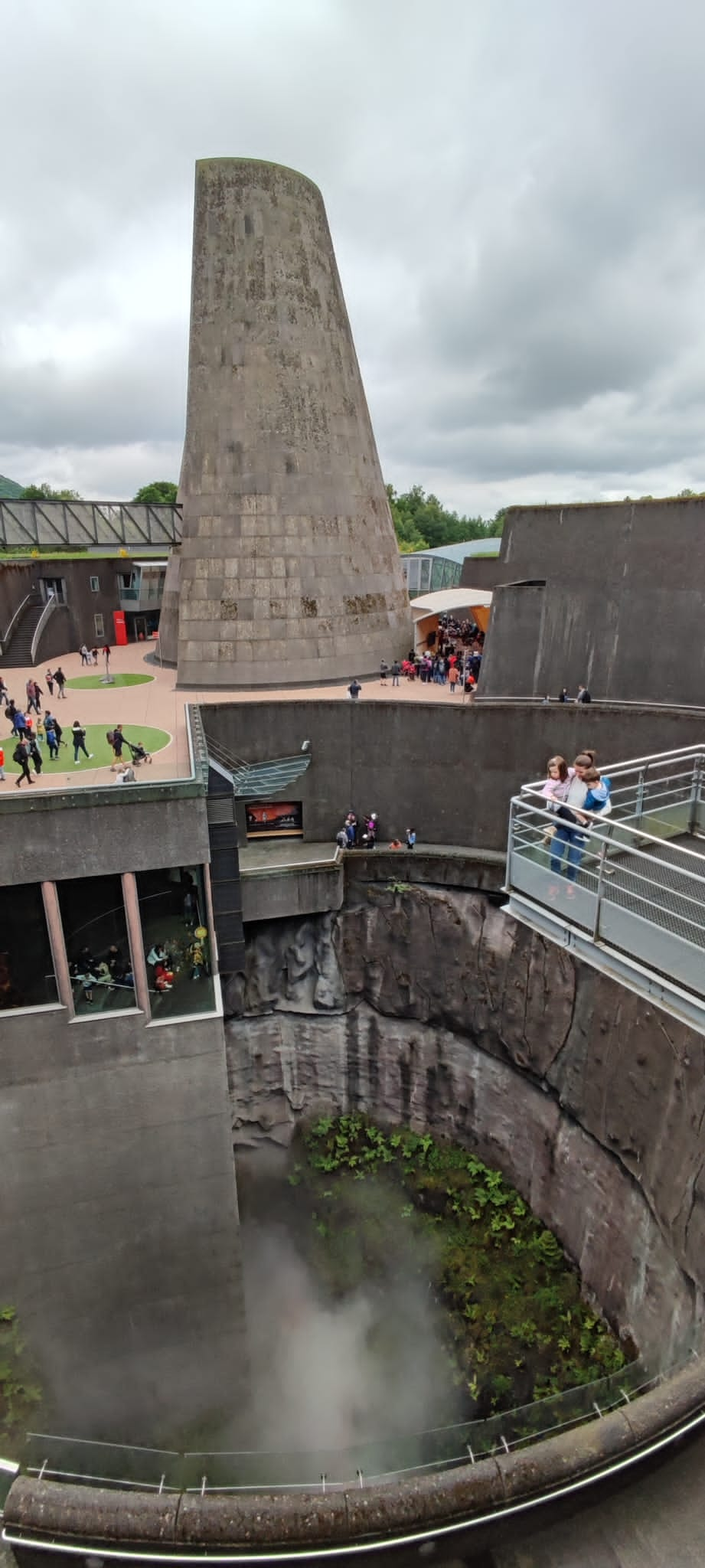 Pondering the descent around Vulcania’s 35-deep crater. (MCArnott)
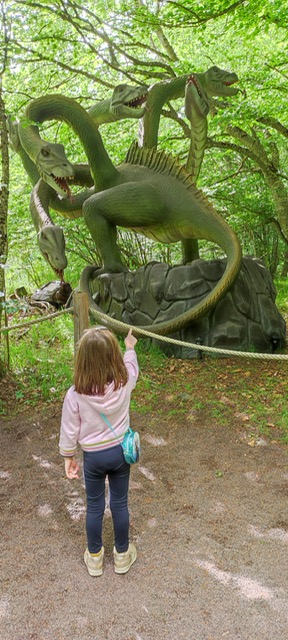 An animated dinosaur standing its ground (MCArnott)
Previously published in 2013 Buckettripper – Revised 2022